A worn or slipping clutch can turn every drive into a frustrating fight with your Jeep’s gearbox. Jeep clutch repair isn’t something that can wait, because the longer you ignore the warning signs, the more damage builds up and the costlier the fix becomes. Whether you’re driving a Wrangler, Cherokee, or Gladiator around Mackay, a healthy clutch is essential for smooth gear changes, responsive acceleration, and reliable control on both highway and off-road terrain.
What Are the Warning Signs Your Jeep Clutch Needs Attention?
The clutch is one of those components that usually tells you when something’s wrong before it fails completely. Common symptoms include a spongy or soft pedal that feels like it’s lost resistance, a burning smell from the engine bay (especially after hill climbs or heavy traffic), or difficulty shifting into gear. You might also notice the engine revving higher than normal while the vehicle accelerates slowly, which is a classic sign of clutch slippage.
- Clutch pedal feels spongy, soft, or sinks to the floor
- Burning smell when accelerating or on hills
- Difficulty selecting gears or grinding noise when shifting
- Engine revs but the vehicle doesn’t accelerate smoothly
- Shuddering or juddering when releasing the clutch
- Clutch engages too high or too low in its travel
Jeep models, particularly Wranglers used for off-road work, can wear clutches faster due to the demands of low-speed manoeuvring, steep terrain, and rough surfaces. If you’ve noticed any of these signs, getting a professional inspection early prevents further wear to the flywheel, pressure plate, and transmission.
How We Diagnose and Repair Jeep Clutch Issues
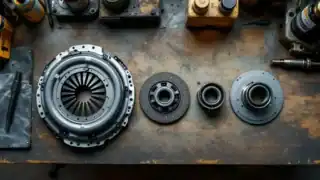
Our approach to Jeep clutch repair starts with a thorough inspection and test drive to understand how the clutch is performing under real driving conditions. We check clutch pedal feel, listen for noises during shifting, and assess whether the problem is the clutch disc itself, the pressure plate, the release bearing, or the hydraulic system that operates the clutch.
Using our latest Snap-On diagnostic equipment, we can pinpoint the exact fault fast rather than guessing or replacing parts unnecessarily. For Jeep vehicles, we follow the manufacturer’s service specifications to guarantee any replacement components meet OEM standards. This matters because Jeep clutches are engineered to handle specific torque loads, and using undersized or aftermarket parts can lead to premature failure or unpredictable pedal feel.
Once we’ve identified the problem, we’ll explain exactly what needs replacing. A typical Jeep clutch repair might involve replacing the clutch disc, pressure plate, and release bearing as a set, rather than just one component. This approach prevents the frustration of coming back six months later when the next part wears out. We also inspect the flywheel for wear or heat damage and the hydraulic master and slave cylinders if they’re part of your Jeep’s system.
Parts and Specifications for Your Jeep
We use genuine or OEM-specification parts, not cheap substitutes that compromise performance or longevity. For Jeep models, this means sourcing clutch kits, flywheels, and hydraulic components that match the factory engineering for your specific year, engine size, and transmission type. Jeep Wranglers, for example, have different clutch requirements depending on whether they’re manual or automatic transmission, and whether they’re TJ, JK, or JL generation models.
What Affects the Cost and Time for Clutch Repair?
The cost of Jeep clutch repair depends on a few key factors. The severity of wear is the first: if the clutch disc is worn but the pressure plate and flywheel are still good, the job is smaller than if heat damage or wear has affected multiple components. The second is parts availability; genuine Jeep parts sometimes take longer to source than universal aftermarket equivalents, but the wait is worth the reliability and performance guarantee.
The third factor is your Jeep’s generation and transmission setup. Some models require more labour because the engine or transmission sits in a tight space, or because additional components like transfer cases need partial removal to access the clutch. We’ll always give you a transparent quote upfront so you know what you’re paying for and why.
Turnaround time is typically a few days, depending on parts delivery. If a component is in stock locally, we can turn it faster. We’ll keep you updated every step of the way so you’re never left guessing how long your Jeep will be off the road.
Why Choose TFD Tyre & Mechanical for Your Jeep Clutch Repair in Mackay
We’re a family-run workshop with 18 years in the trade, and we’ve seen every clutch failure that Jeeps throw at us. We don’t push unnecessary work or sell you parts you don’t need; our philosophy is honest advice and transparent quotes at a fair price. That means when we diagnose your clutch, you’ll understand exactly what’s worn, why it’s worn, and what the safest option is for your Jeep’s long-term health.
We stock genuine and OEM-spec parts, not cheap substitutes, so your Jeep gets components engineered to last. Our latest Snap-On diagnostic equipment lets us identify faults accurately, which saves you money by avoiding trial-and-error part replacement. And because we’re a one-stop shop with mechanical, tyre, wheel alignment, RWC and COI inspections, and air conditioning services all under one roof, if your Jeep needs anything else while it’s with us, we can sort it without sending you elsewhere.
With 4.7 out of 5 stars from over 89 reviews, our Mackay customers know they can trust us to get the job done right. If you’re not happy with the work, our satisfaction guarantee means we’ll make it right. That’s the kind of trust we’ve built with Mackay drivers over nearly two decades.
If your Jeep’s clutch is showing signs of wear or slippage, don’t delay. Book Your Free Inspection to find out exactly what’s happening and what it will cost to fix. Call Us Today or book online, and we’ll get your Jeep back to smooth, reliable driving.