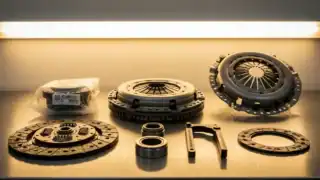
A clutch that’s starting to slip, grinding when you engage first gear, or becoming harder to press down is telling you something needs attention. European vehicles, particularly Volkswagen, Audi, BMW, and Mercedes-Benz models, are known for their responsive hydraulic and mechanical clutch systems, but they’re also prone to specific wear patterns that demand early intervention. European vehicles clutch repair in Mackay isn’t something you should delay, especially if you’re noticing that familiar smell of friction material or difficulty finding a smooth bite point. We’ll walk you through what’s happening with your clutch, how we diagnose it, and what to expect when you bring your car in.
Signs Your European Clutch Needs Inspection
The symptoms of a failing clutch are usually impossible to ignore, but the earlier you catch them, the better your options. Here’s what we commonly see in European vehicles across Mackay and the surrounding area:
- Soft or spongy clutch pedal that slowly sinks to the floor (usually a hydraulic leak or slave cylinder issue)
- High biting point or a clutch that engages only at the very top of the pedal travel
- Slipping under acceleration, especially when the engine is under load or the car is fully loaded
- Difficulty selecting gears, grinding noise when changing down, or resistance when putting the car into reverse
- Burning smell from the engine bay or underneath the car, particularly when climbing hills or accelerating hard
- Noticeable vibration or chatter when engaging the clutch from a standstill
European vehicles often signal clutch problems earlier than other makes, thanks to their tighter tolerances and more responsive pedal feedback. That’s actually useful, because it means you get a clearer warning before total failure leaves you stranded.
How We Diagnose and Repair European Clutch Problems
European vehicles clutch repair starts with a proper diagnosis. We don’t guess or recommend a full clutch kit without understanding what’s actually wrong. Using our latest Snap-On diagnostic equipment, we can isolate whether the issue is mechanical wear (friction material gone, pressure plate fatigue), hydraulic (fluid loss, failed slave or master cylinder), or a combination.
Here’s our process:
- Road test and symptom confirmation, noting pedal feel, engagement point, and any noise or smell
- Hydraulic system check, including fluid level and condition, and circuit pressure testing on models with electronic clutch control
- Visual inspection of the engine bay and underneath for signs of fluid leaks, hose degradation, or worn linkages
- For many European models, especially VW and Audi with dual-mass flywheels, we assess flywheel condition and confirm whether it’s re-usable or needs replacement
Once we know what’s wrong, we’ll explain your options clearly. A clutch that’s simply worn out but with a healthy pressure plate and flywheel might just need friction material replacement and master or slave cylinder repair. A pressure plate that’s failed or a heavily scored flywheel means a more extensive job. The good news is we use genuine and OEM-spec parts for European vehicles, so your clutch will perform the way your car was engineered to perform, not as a cost-cut aftermarket compromise.
What Affects Cost and How Long It Takes
European vehicles clutch repair isn’t one fixed-price job. Several variables change what you’ll actually spend and how long the work takes:
The extent of wear. If only the friction material has degraded and the pressure plate, flywheel, and hydraulic system are sound, the job is straightforward. If the pressure plate is damaged, the flywheel is scored or worn, or the dual-mass assembly (common in European diesels and turbo petrol engines) is failing, you’re looking at a more involved repair.
Hydraulic versus mechanical issues. A failed master or slave cylinder is often a quick fix. A slow hydraulic leak from hoses or seals can be diagnosed fast and fixed efficiently. Mechanical clutch failure always requires gearbox removal, which takes longer.
Dual-mass flywheel condition. Many European vehicles, especially Volkswagen, Audi, and BMW, use dual-mass flywheels to reduce vibration and noise. If the internal damping springs have failed or the primary and secondary masses are separating, replacement is needed and it’s a costlier component than a solid flywheel.
Parts availability. Genuine OEM parts for European vehicles are usually in stock or arrive quickly from specialist suppliers. We won’t keep you waiting with backorders.
Why Choose TFD Tyre & Mechanical for European Clutch Repair in Mackay
You could take your European vehicle to a general mechanic, but European cars deserve mechanics who understand their specific engineering. We’ve spent 18 years working on vehicles across Mackay, and European models make up a significant part of that experience. We know the common failure patterns for Volkswagen, Audi, BMW, and Mercedes clutches, and we know which OEM parts are genuinely equivalent to original components and which cheap replacements will fail inside two years.
Our Snap-On diagnostic equipment lets us find the real fault fast, not waste your time replacing parts you don’t need. We fit genuine and OEM-spec parts, not cheap substitutes. We’re a family-run workshop with a satisfaction guarantee: if you’re not happy with the work, we make it right. And because we’re a one-stop shop with tyres, mechanical, wheel alignments, RWC and COI inspections, and air con all under one roof, you won’t be sent between three different places to get your car sorted. Our 4.7-star rating from over 89 five-star reviews reflects our commitment to honest service and transparent quotes at a fair price.
Next Steps
If your clutch is showing signs of wear, don’t wait for complete failure. Book Your Free Inspection to let us diagnose the exact issue and give you honest, transparent advice on what needs to happen. Call Us Today, and we’ll get your European vehicle back to reliable, smooth clutch operation in Mackay.