A worn or failing clutch is one of those repairs that catches people off guard, but the symptoms rarely arrive without warning. When your Volkswagen’s clutch starts to slip, grab poorly, or feel spongy underfoot, you’re looking at a repair that can’t wait much longer. Volkswagen clutch repair in Mackay is something we see regularly across the VW range, from the Golf and Passat to the Polo and Jetta. The clutch is your connection between the engine and gearbox, and once it’s compromised, your car becomes unreliable and potentially unsafe to drive. We’ll walk you through what’s happening, what the repair involves, and what you can expect when you bring your VW to TFD Tyre & Mechanical.
Signs Your Volkswagen Clutch Needs Attention
The clutch doesn’t fail overnight in most cases, but the warning signs build fast. If you’re noticing any of these, it’s time to get a proper inspection.
- Clutch pedal feels spongy, soft, or slowly sinks to the floor after pressing
- Engine revs climb but the car doesn’t accelerate, especially on hills or from standstill
- Difficulty engaging gears, grinding noise when changing, or gears popping out
- Burning smell when driving, particularly after hills or heavy traffic
- Clutch engages very high (near the very top of pedal travel)
- Vibration or chatter through the pedal when engaging from a stop
Some of these symptoms point to the clutch friction material itself wearing out, others to hydraulic failure in the clutch system. VW clutches are well engineered, but they’re a wearing item, and the wear rate depends heavily on driving style, terrain, and how many times you’re sitting in stop-start traffic. Mackay’s mix of city driving and regional trips can accelerate wear faster than suburban-only use.
What Happens During Volkswagen Clutch Diagnosis and Repair
We don’t guess with clutch problems. Our first step is a full diagnostic to identify exactly where the fault lies.
Inspection and Diagnostics
We’ll start by listening to your description, then take your VW for a test drive to feel how the clutch behaves. We’ll check pedal pressure, engagement point, and any noise or vibration. For VW vehicles, we pay close attention to hydraulic clutch systems, which are common across the range. Our Snap-On diagnostic equipment helps us identify whether the problem is mechanical wear, a failed slave cylinder, air in the line, or a faulty pressure sensor. On many VW models, we can retrieve fault codes from the gearbox control unit that point directly to the issue.
What the Repair Involves
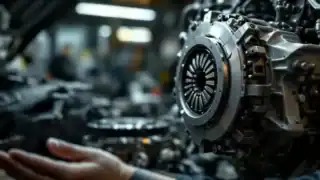
Once we’ve diagnosed the fault, the repair depends on what we’ve found. A full clutch replacement involves removing the gearbox, inspecting the flywheel, installing genuine or OEM-spec clutch components, and bleeding the hydraulic system. If the issue is hydraulic, we might replace the slave cylinder, master cylinder, or both, depending on what’s failed. For VW models with dual-mass flywheels (common on turbocharged VWs), we inspect the flywheel carefully and replace it if there’s wear or damage, because a worn flywheel will destroy a new clutch quickly.
We use genuine Volkswagen or OEM-equivalent clutch kits and hydraulic components. Cheap aftermarket clutches might save a few dollars upfront, but they wear faster, engage roughly, and can fail without warning. You’re better off doing it once properly than twice with inferior parts.
What Affects Cost and Time for Your Repair
Clutch repair costs and timeframes vary based on several real factors. A straightforward friction plate replacement takes less time than a full clutch kit with flywheel replacement. If the hydraulic system is involved, bleeding and testing add time. Parts availability matters too; genuine VW parts can sometimes take a few days longer than aftermarket alternatives, but the reliability is worth waiting for.
The condition of the flywheel also drives the total cost. If the flywheel shows scoring or heat damage, it needs replacement to protect your new clutch. Some older VW models and higher-mileage vehicles may have additional issues we discover once we’re inside, such as worn gearbox seals or engine oil contamination. We’ll always discuss these with you and explain exactly what’s needed before proceeding.
The labour itself depends on vehicle access and whether we need to remove the engine or just drop the gearbox. We’ll give you a clear estimate before we start work, and if anything unexpected shows up, we’ll ring you immediately rather than assume.
Why TFD Tyre & Mechanical is Your Best Choice for Volkswagen Clutch Repair
We’re a family-run, independent workshop with 18 years in the trade. We’re not a franchise pushing you towards the most expensive option, and we’re not a dealership charging dealership rates. We use latest Snap-On diagnostic equipment to find the real fault fast, so you get the repair you actually need, not a list of guesses. We stock genuine and OEM-spec parts, and we don’t cut corners on components that directly affect how your car drives and handles.
As a one-stop shop in Mackay, we handle your full mechanical needs under one roof. Whether you need an alignment check, brake inspection, or a full service alongside your Volkswagen clutch repair, you’re not bouncing between different workshops. We’re a TMR-approved inspection station and ARCtick licensed for air conditioning work, which means you can trust our standards across everything we do.
We’ve earned a 4.7-star rating from over 89 five-star reviews because we stand behind our work. Most importantly, we guarantee your satisfaction. If you’re not happy with the work, we make it right. That’s not marketing language; that’s how we’ve stayed in business and earned the trust of Mackay families and local drivers over nearly two decades.
Next Steps: Get Your Volkswagen Clutch Inspected in Mackay
If your VW clutch is slipping, grabbing, or showing any of the signs we’ve described, don’t drive it hard or far. Book Your Free Inspection today or Call Us Today to discuss your symptoms. We’ll get you in quickly, diagnose the problem accurately, and give you an honest quote with no surprises.