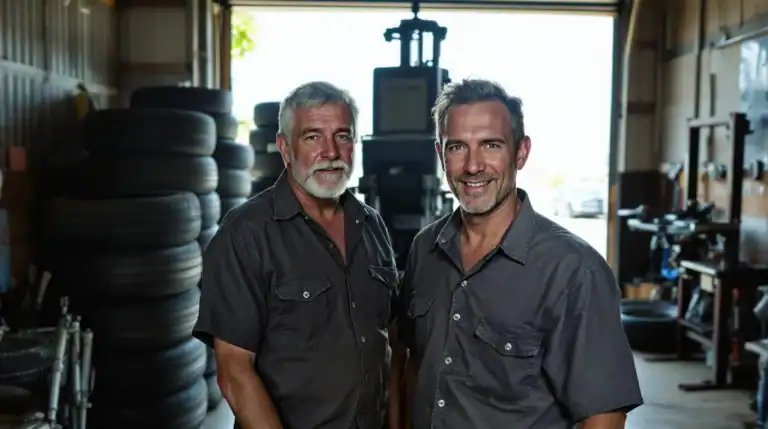
Japanese vehicle suspension specialist work focuses on diagnosing and repairing the complex suspension systems that keep your Toyota, Honda, Nissan, Mazda, Mitsubishi, or Suzuki balanced, responsive, and safe on the road. In Mackay, where roads range from smooth urban streets to rougher regional highways, suspension wear accumulates steadily. A Japanese vehicles suspension specialist understands the specific geometry, bushings, shock absorber designs, and control arm configurations that Japanese manufacturers engineer into their platforms, and knows how to restore them to factory performance rather than applying generic fixes.
Signs Your Japanese Vehicle’s Suspension Needs Inspection
Suspension problems often announce themselves through feel and sound before they become obvious. Listen for what your car is telling you:
- Clunking or knocking sounds from under the vehicle, especially over bumps or during cornering
- A bouncy, diving, or rolling sensation when accelerating, braking, or turning
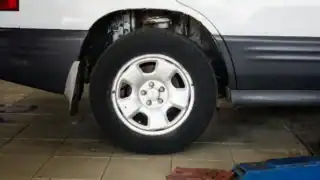
- Uneven tyre wear patterns, particularly on the inside or outside edges of the tread
- The front or rear sitting noticeably lower on one side
- Steering that feels vague, loose, or requires constant correction
- Groaning or creaking when the vehicle flexes over rough ground
- Reduced grip or stability, as if the chassis is floating rather than planted
Japanese vehicles are engineered for precision handling, so any departure from that characteristic tight response usually means suspension components have worn or failed. Worn struts, failed bushings, damaged anti-roll bar links, or compromised shock absorbers affect not only comfort but also braking performance and tyre longevity. A suspension specialist will identify which components are worn and explain exactly what needs repair or replacement.
What a Japanese Vehicles Suspension Specialist Does
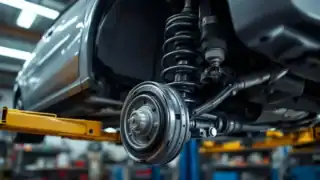
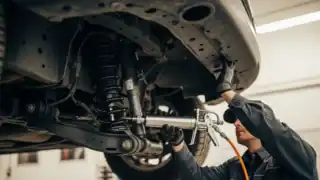
Diagnosis begins with a thorough inspection and test drive. We place your vehicle on our hoist and visually examine all suspension components: struts and shocks, control arms, track rod ends, sway bar bushings, and mounting points. For Japanese vehicles, this includes attention to model-specific suspension layouts. Honda Civics and Accords use double-wishbone front suspension that requires precise alignment; Mitsubishi Lancers rely on multi-link setups that are less forgiving of worn bushings; Toyota Corollas have torsion beam rear suspension that needs careful diagnosis to isolate noise sources.
We use Snap-On diagnostic equipment to measure suspension geometry and identify misalignment caused by wear or impact damage. If struts are worn, we test their damping force to confirm failure rather than assuming based on age alone. This approach avoids replacing parts that still have life left and identifies the actual source of the problem, not just a symptom.
Once diagnosis is complete, we explain what we’ve found in plain terms, show you photos of wear patterns, and quote repair options using genuine or OEM-equivalent parts that match your vehicle’s original specification. For Japanese vehicles, we source parts that align with manufacturer tolerances and materials, so the suspension geometry and handling characteristics are restored correctly.
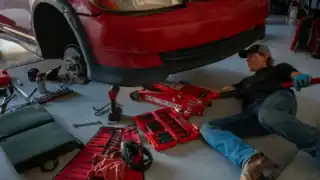
Repair work typically includes strut or shock replacement, control arm or track rod end renewal, bushing replacement, and full wheel alignment to factory settings. We don’t cut corners with cheap suspension components. Suspension directly affects your safety, braking distance, and tyre life, so we use parts that match the original engineering.
Cost and Time Factors for Suspension Work in Mackay
Suspension repair costs vary depending on which components have failed and whether you choose OEM or quality aftermarket parts. A single strut replacement takes a few hours; a full front-end overhaul with control arms, bushings, and alignment may take a full day. Parts availability also plays a role. Genuine Japanese parts sometimes take longer to arrive than aftermarket equivalents, but they often cost less than dealership parts and fit more reliably.
The severity of wear also matters. A single worn track rod end might be a quick fix; worn suspension mounting points or bent control arms from impact damage require more time to assess and may involve additional mechanical work. We’ll give you a clear quote and timeframe before we start, and we won’t proceed without your approval if extra work is discovered.
Why Choose TFD Tyre & Mechanical for Japanese Vehicles Suspension Work
We’re a family-run workshop with 18 years in the trade, and we’ve spent that time building expertise in the vehicles Mackay drivers own. Our Snap-On diagnostic equipment allows us to pinpoint suspension faults accurately without guessing or replacing parts unnecessarily. We use genuine and OEM-spec parts, not cheap substitutes that wear out quickly or compromise your car’s handling and safety.
As a one-stop shop, we can handle suspension repairs, follow up with wheel alignments, check your tyres for wear caused by suspension problems, and carry out full vehicle diagnostics if other systems are affected. You don’t have to visit multiple workshops. We’re also a TMR-approved inspection station, so if suspension issues have affected your vehicle’s roadworthiness, we can complete your RWC or COI inspection on the same visit.
We stand behind our work with a satisfaction guarantee. If you’re not happy with the repair, we make it right. Honest advice and transparent quotes matter more to us than pushing the most expensive option. Our 4.7 star rating from over 89 reviews reflects the trust Mackay families place in our repairs and advice.
Next Steps for Your Suspension
If your Japanese vehicle is showing any of the warning signs above, book your free inspection today to have a specialist diagnose the issue properly. Book Your Free Inspection or Call Us Today and we’ll have you back on the road with suspension that feels responsive and safe again.