Family-Run & Trusted
Genuine & OEM Parts
4.7★ Rating
Satisfaction Guaranteed

4.7 (89+ 5★ Reviews)

Professional Hyundai Brake Service In Mackay

We service Hyundai brakes in Mackay with genuine parts and Snap-On diagnostics to find the real fault fast. Book Your Free Inspection today.

Expert Diagnostics

Honest Advice

4.7★ Rating

Hyundai Brake Experts

Book Your Free Inspection

Fill in the form and we'll get back to you shortly. No obligation.

Booking Form
  • Vehicle Details
  • Confirm Vehicle
  • Services
  • Contact Details
Transparent Quotes
Quality Parts Used
Satisfaction Guarantee

Why Book With Us

Book Your Free Inspection
Drop Off Your Car
We Get to Work
Back on the Road

Hyundai brake service is one of the most important safety checks your vehicle will ever have. When your brakes start to feel spongy, grind, or take longer to stop, it’s time to get them inspected properly. We’ve been servicing Hyundai vehicles across Mackay for years, and we know exactly what to look for on these cars. Your brakes are the only thing between you and a collision, so we don’t cut corners.

When Do Hyundai Brake Pads and Rotors Need Replacement?

Most Hyundai owners notice brake warning signs long before they become dangerous. Listen for a high-pitched squealing sound when you’re braking lightly. That’s usually the wear indicator pad, designed to alert you that your brake pads are getting thin. If you ignore it and keep driving, you’ll eventually hear grinding, which means metal is rubbing directly on the rotor. That’s expensive and unsafe.

You might also feel your brake pedal getting softer or spongy when you press it, especially if you brake hard repeatedly. Some Hyundai drivers notice their vehicle pulling to one side when braking, which suggests uneven pad wear or a caliper sticking. In Mackay’s warm climate, brake fluid can degrade faster, so if your brakes feel less responsive than usual, that’s another sign something needs attention.

Hyundai’s logbook servicing interval doesn’t always spell out exact brake pad replacement schedules because wear depends on your driving style and conditions. Aggressive braking wears pads faster. If you’re regularly towing or doing heavy driving, your pads may only last 40,000 to 50,000 kilometres. Gentler driving can stretch that to 80,000 kilometres or more. The only way to know for sure is to have your brakes inspected by a technician who can measure pad thickness and check rotor condition.

How We Inspect and Service Hyundai Brakes

Our brake service starts with a full diagnostic inspection. We get your Hyundai on the hoist and remove the wheels so we can see everything clearly. We measure brake pad thickness with precision tools and inspect both sides of each rotor. On Hyundai models, we also check the condition of the brake fluid using a moisture tester. Over time, brake fluid absorbs water from the air, and if it gets too contaminated, your braking performance suffers.

We use our latest Snap-On diagnostic equipment to test the brake system’s electronic components. Hyundai vehicles increasingly rely on ABS (anti-lock braking systems) and stability control, and if any sensor is faulty, your warning light might stay on even after new pads are fitted. We scan for those fault codes and address the root cause, not just the symptom.

If your pads need replacing, we fit genuine Hyundai or OEM-spec equivalent parts, never cheap substitutes that feel and wear differently. We bed in the new pads properly, which means running them through a gentle breaking-in procedure so they achieve full braking power safely. We also check your calipers and hardware. If a caliper is sticking, it’ll wear new pads unevenly and cause the same problem within a few thousand kilometres. It’s worth fixing it right the first time.

For rotor replacement, we measure runout and thickness. Hyundai rotors can often be skimmed (machined down) if they’re still thick enough, which saves money. If they’re too thin or too damaged, we replace them with genuine parts that match your vehicle’s original specification.

What Affects Brake Service Time and Cost for Hyundai Vehicles

A basic brake pad inspection takes under an hour. If you need pads only, you’re looking at a quick turnaround. If rotors also need replacing or skimming, the job takes a bit longer because we have to do the work carefully to ensure perfect alignment and safety.

Cost depends on which Hyundai model you drive. A smaller hatchback like an i20 has different brake components than a Santa Fe SUV, so parts prices vary. Genuine Hyundai pads and rotors are mid-range in price compared to cheap aftermarket alternatives and premium racing pads. We stock common Hyundai brake components, but if your vehicle needs something we don’t have in stock, we order it quickly and keep you informed about timing.

If your brake fluid needs flushing, that’s an extra service we can do while we’re in the system. Hyundai doesn’t always call for a fluid flush during routine servicing, but if we find moisture in the brake fluid or you notice your pedal feels softer than it should, a flush is a worthwhile investment in safety.

Why Trust TFD Tyre & Mechanical for Your Hyundai Brake Service in Mackay

We’re a family-run workshop with 18 years in the trade. We’re not a franchise or dealership, so we’re not trying to upsell you on services you don’t need. We give you honest advice and transparent quotes before we start any work. You’ll know exactly what needs doing and what it’ll cost.

We use the latest Snap-On diagnostic equipment to find the real fault fast, so we’re not guessing at what’s wrong with your Hyundai’s brakes. We fit genuine and OEM-spec parts, not cheap substitutes. And because we’re a one-stop shop, you get your brakes serviced, your tyres checked, your alignment inspected, and your air con serviced all under one roof. No running between a tyre place, a mechanic, and an inspection station. Our satisfaction guarantee means if you’re not happy with the work, we make it right. We’re rated 4.7 out of 5 stars across 89+ customer reviews.

Book Your Free Inspection online or Call Us Today to have your Hyundai’s brakes checked properly. We’ll let you know what’s needed to keep you safe on Mackay roads.
Other Services

Whatever your needs we have you covered, see some similar services below or click "See All Services" to explore our full service offering.

Honest Mechanics Mackay Drivers Rely On

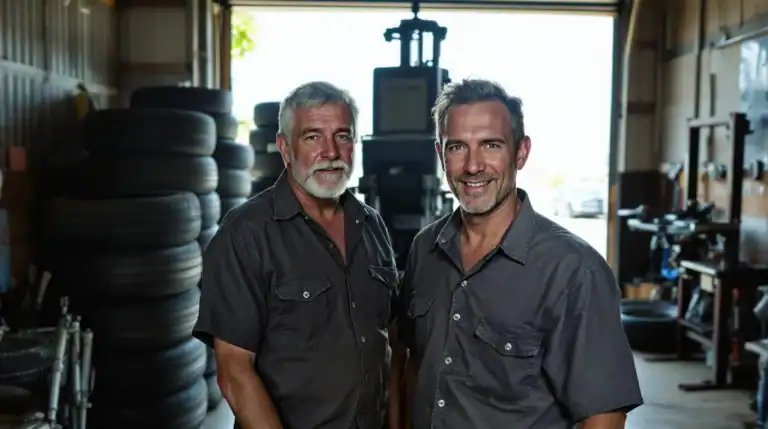
Family-run by Mark and Elijah with 18 years in the trade, we give you straight answers, fair prices, and quality parts — not the runaround.

Honest, Upfront Quotes

You’ll know exactly what’s needed and what it costs before we touch your car.

Latest Snap-On Diagnostics

Bring your vehicle in and we’ll assess it and give you a clear, honest quote upfront.

Hyundai-Specific Brake Diagnostics

We know Hyundai brake systems inside out, so faults get found fast and fixed right.

How Hyundai Brake Service Works

From booking through to safe brakes on the road, here's what to expect during your Hyundai brake service.

Step 1

Book Your Free Inspection

Book your free inspection to diagnose your brake condition and receive a clear, upfront quote.

Step 2

Hyundai Brake System Inspection

We measure pad thickness, rotor condition, and fluid quality using diagnostic equipment to identify the issue.

Step 3

Precision Brake Repair

We fit OEM-spec pads, rotors, and lines, then test your brakes to confirm safety and performance.

Step 4

Quality Check & Collection

Final test drive confirms perfect brake performance. We review the work with you, then you're back on the road.

Rated 4.7 Stars by Our Customers

4.7 (89+ 5★ Reviews)

Quality Parts From Trusted Suppliers

We fit genuine and OEM-spec parts sourced from reputable suppliers. No cheap substitutes - just quality components that do the job properly.

Book Your Free Inspection

Fill in the form and we'll get back to you shortly. No obligation.

Booking Form
  • Vehicle Details
  • Confirm Vehicle
  • Services
  • Contact Details
Transparent Quotes
Quality Parts Used
Satisfaction Guarantee

Why Book With Us

Book Your Free Inspection
Drop Off Your Car
We Get to Work
Back on the Road

Got Questions? We Have Answers

Browse the questions below for quick answers about our services. If yours isn't listed, give us a call and we'll sort you out.

A routine Hyundai brake service typically takes 1 to 2 hours, depending on whether we’re just replacing pads or if rotors need resurfacing or replacement. We’ll inspect your brakes fully first and give you a clear picture of what’s needed before we start work. If additional components need attention, we’ll let you know the extra time required.

Ignoring brake noise is risky. Squealing usually means pads are wearing thin; grinding indicates metal-to-metal contact, which damages rotors and can reduce braking power. The longer you delay, the more expensive the repair becomes and the greater the safety risk to you and others on the road. Get it checked as soon as you notice the sound.

Australian consumer law under ACCC guidance generally allows you to have your vehicle serviced by qualified independent mechanics without affecting manufacturer warranty, provided the work is done to the correct standard and genuine or OEM-equivalent parts are used. We use genuine and OEM-spec parts on all Hyundai brake work. For your specific warranty terms, check your paperwork or contact your Hyundai dealer, but independent servicing is a legitimate option.

We inspect brake pads, rotors, callipers, brake fluid, hoses, and the master cylinder. We measure pad thickness and rotor runout to see if they need replacement. We top up or flush fluid if required and test brake pedal feel and responsiveness. You’ll get a full report on what we found and what needs doing before we proceed with any work.

Brake pad wear depends on driving habits and road conditions. Most drivers see pads last 50,000 to 70,000 kilometres, but heavy city driving or frequent braking can shorten that. We recommend a brake inspection every 12 months or 15,000 kilometres, whichever comes first. We’ll tell you when pads are approaching the limit so you can plan ahead.

Hyundais generally have reliable brake systems, but we do see premature rotor wear on some models, particularly in Mackay’s coastal climate where salt exposure accelerates corrosion. Some owners report brake noise earlier than expected. Regular inspection and using quality parts help prevent these issues. If you’ve noticed brake noise or a soft pedal, we can diagnose the cause quickly.

Uneven pad wear often points to callipers not gripping evenly or suspension issues affecting wheel alignment. Warped rotors or a sticky brake hose can also cause one side to wear faster than the other. During your brake service, we inspect both pads and rotors to spot these problems early. Addressing the root cause prevents costly repeat replacements.

No, a soft or spongy brake pedal signals air in the brake lines, low fluid, or internal callipers issues. Your braking power may be compromised, creating a safety hazard. You should have this checked immediately rather than continuing to drive. We can bleed your brake system or diagnose the underlying problem to restore proper pedal feel and stopping power.

Mixing brake fluid types can damage your hydraulic system and reduce braking performance. Different fluids have different boiling points and chemical properties that don’t mix safely. We recommend professional fluid checks and top-ups during your service. If your fluid level drops significantly between services, it usually means a leak that needs investigation.

We use genuine Hyundai parts and OEM-equivalent components that meet manufacturer specifications for your model. Genuine parts often carry better warranties and are engineered to match your vehicle’s exact brake system. We discuss options with you based on your needs and budget, always prioritising safety and quality over cheap alternatives.

We measure rotor thickness and surface condition during inspection. If rotors are within safe minimum thickness and show no deep scoring or cracks, resurfacing may work. If they’re too thin, cracked, or severely worn, replacement is necessary. We’ll show you the measurements and explain our recommendation so you understand exactly why we’re suggesting the work needed.

A brake warning light after service usually means the fluid level sensor needs resetting or there’s residual air in the system after fluid work. Sometimes the electronic parking brake needs recalibration. We check all warning lights before you leave and will troubleshoot if one persists. If we didn’t cause it, we’ll help identify what needs attention.

Continue to site