Brake problems in a Hyundai need attention fast. Whether you’re noticing a soft pedal, warning lights on the dash, or a grinding sound when you brake, the issue could range from simple pad wear to something more serious with your hydraulic system. A Hyundai Brake Specialist in Mackay will diagnose the real fault and get your brakes back to safe, reliable condition. Hyundai models have specific brake design features and service requirements, so it’s worth having someone who knows the brand work on yours.
When Do You Need Hyundai Brake Service?
Most brake symptoms are obvious once you notice them, but some creep up gradually. Your brakes are safety-critical, so don’t wait for a warning light or a trip to the workshop. Watch for these common signs:
- Soft or spongy brake pedal that sinks toward the floor
- Brake warning light illuminated on the dash
- Grinding or metallic noise when braking, especially at low speed
- Brake pedal feels harder than usual, requiring more pressure
- Vibration or pulsing through the pedal during braking
- Fluid leaks under the car, particularly near the wheels
- One side of the car pulls to the left or right when braking
- Brake fluid level dropping over time without visible leaks
Hyundai vehicles often show brake fade earlier than some other brands if brake fluid hasn’t been flushed regularly, so if your pedal feels less responsive than it used to, that’s a signal to get it checked. Many Hyundai owners also experience uneven pad wear on the front axle, which our diagnostics catch quickly.
What a Hyundai Brake Specialist Does During Inspection
We start by connecting your Hyundai to our Snap-On diagnostic equipment. This isn’t guesswork. The scanner reads fault codes from your anti-lock braking system (ABS) and electronic stability control modules, which tell us exactly where the problem is. Hyundai’s diagnostic protocols are different from Fords or Mazdas, and we follow the OEM procedure to the letter.
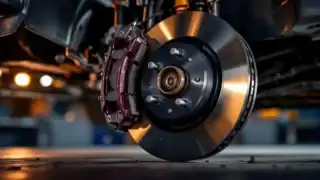
Once we’ve read the codes, we move to the physical inspection. We remove wheels, measure pad thickness on all four corners, and check rotor condition. Hyundai front brake systems typically have larger rotors than the rears, and we inspect both with precision calipers. We also check brake hose condition, wheel cylinder function on the rear, and fluid colour and level in the master cylinder. If the fluid looks dark or burnt, it’s overdue for a flush.
For hydraulic issues, we test the system under pressure. A spongy pedal often signals air in the lines or a failing master cylinder. On Hyundai models, the proportioning valve can also cause uneven braking between front and rear axles, and we test that specifically. If your ABS light is on, the scan reveals whether it’s a sensor fault, a faulty modulator, or a wiring issue. All of these require different fixes.
What Affects Your Brake Service Cost and Timeframe
Brake work isn’t one fixed price because every car comes in at a different point in its service life. If you need only pad replacement, the job is straightforward and usually completed in a day. If rotors are worn past safe limits, we replace them alongside the pads. That adds time because rotors need to be cross-drilled or replaced (depending on your model), and then we bed in the new pads properly.
Hyundai brake parts sit in the middle ground for cost. Genuine OEM Hyundai parts cost more than cheap imports but less than some European brands. We use genuine or OEM-equivalent parts because we’re not comfortable gambling with your brakes. If you need a master cylinder, proportioning valve, or ABS module, that’s more expensive and takes longer because those components must be ordered and installed correctly.
Fluid flushes add time if they’re needed. On a Hyundai with high mileage or dark fluid, a complete brake system flush clears contaminants and moisture, restoring pedal feel and stopping power. This is one of those preventative jobs that costs less now than brake failure costs later.
We always give you a transparent quote before we start work, so you know the scope and cost upfront. No surprises.
Why TFD Tyre & Mechanical Is Your Local Hyundai Brake Expert
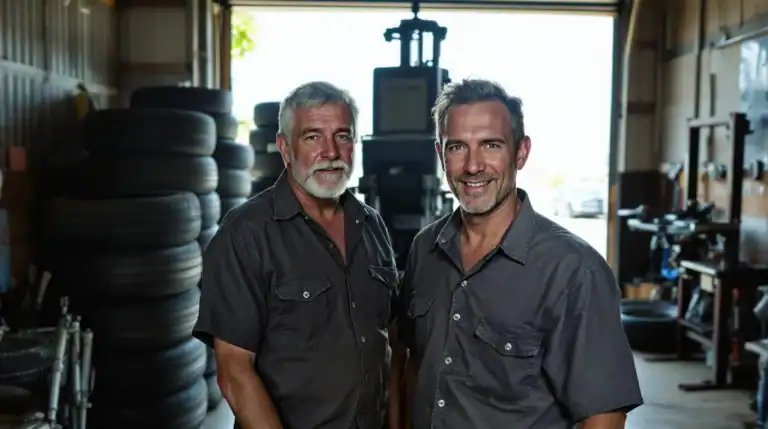
We’re a family-run workshop with 18 years in the trade, and we’ve worked on thousands of Hyundai models across Mackay and the surrounding region. We don’t push unnecessary work or recommend parts you don’t need. We diagnose with our Snap-On diagnostic equipment, which reads Hyundai fault codes accurately and fast, then we tell you exactly what’s wrong and what fixing it costs.
We fit genuine or OEM-spec Hyundai brake parts, not cheap alternatives that wear faster or don’t fit right. Your brakes are not the place to save a few dollars. We also handle everything else under one roof: if your brakes need work, we can check your tyres, alignment, and fluid levels while you’re here. No sending you between shops. Our workshop is TMR-approved for RWC and COI inspections, ARCtick-licensed for air conditioning, and fully equipped for wheel alignments and tyre sales and fitting.
Our customers trust us because we’ve earned it. With a 4.7-star rating from 89 plus five-star reviews, we know what good service looks like. If you’re not happy with the work, we make it right. That’s our satisfaction guarantee, and it means you can trust the advice you get.
Book Your Hyundai Brake Inspection in Mackay Today
Don’t ignore brake symptoms. Brake safety is not negotiable, and early diagnosis stops small issues from becoming expensive failures. Call Us Today or Book Your Free Inspection online. We’ll scan your Hyundai, diagnose the issue, and get you back on the road safely in Mackay.