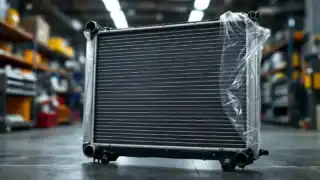
A Hyundai cooling system flush is one of those maintenance tasks that keeps your engine running at the right temperature and prevents costly breakdowns down the track. Over time, your coolant breaks down and accumulates rust particles and debris that reduce its ability to protect your engine. A proper flush replaces old, degraded coolant with fresh fluid and clears out the system — something Hyundai owners in Mackay should consider every few years or as recommended in their service schedule, depending on driving conditions and coolant type.
When does a Hyundai cooling system need a flush?
Unlike a simple coolant top-up, a full flush addresses what you can’t see. Your Hyundai’s cooling system circulates fluid through the engine block, radiator, heater core, and thermostat housing. Over time, coolant oxidises and deposits build up inside passages and the radiator core. These deposits restrict flow and reduce cooling efficiency, which forces your engine to work harder and run hotter than it should.
Watch for these signs that your Hyundai cooling system needs attention:
- Coolant that looks discoloured, cloudy, or rusty rather than bright green, pink, or orange (depending on your Hyundai model’s specification)
- The engine running hotter than normal, even in cool weather
- Sweet-smelling coolant leaks under the car or in the engine bay
- Visible corrosion or crusty buildup around hose connections and the radiator cap
- Your temperature gauge creeping higher during normal driving
- Heater blowing cool air when it should be warm
Many Hyundai owners overlook the cooling system until a problem shows up on the dashboard. By then, internal corrosion may have already damaged the water pump or radiator. A scheduled Hyundai cooling system flush catches this before failure happens, which saves money and keeps your car reliable.
What happens during a cooling system flush at our Mackay workshop
We don’t just drain and refill. A proper flush requires specific steps to ensure old coolant and deposits are completely removed from every passage in your Hyundai’s system.
First, we inspect the coolant condition and check your Hyundai’s service manual to confirm the correct coolant specification. Hyundai vehicles use different coolant types depending on model year and generation. Mixing incompatible coolants can cause corrosion, so we always use the right fluid for your car. Using our Snap-On diagnostic equipment, we also scan for any temperature sensor faults or thermostat issues that could mask underlying cooling problems.
Next, we drain the old coolant completely from the radiator, engine block, and heater circuit. We then run a flush solution through the system to break down rust and mineral deposits clinging to the inside of hoses, the radiator core, and the engine block. This takes time. Rushing a flush leaves contamination behind. After flushing, we refill with fresh Hyundai-approved coolant and run the engine to purge air pockets and verify the thermostat opens and closes properly.
We also inspect hoses for cracks or soft spots, check the radiator for leaks or blockages, and confirm the heater operates correctly. If we find a weak hose or a failing water pump during the flush, we’ll show you exactly what we found and discuss repair options before moving ahead.
What affects the cost and time for a Hyundai coolant flush
Several factors influence how much time and parts a cooling system flush will take. Hyundai models vary in size. A small hatchback has a smaller coolant capacity and fewer hose runs than a Santa Fe or Tucson. Older coolant that’s heavily oxidised may need extra flush cycles to clear all deposits. If we discover leaks, corrosion damage, or a faulty thermostat during the flush, addressing those will add to the job.
The type of coolant also matters. Some Hyundai models use long-life pink or orange coolant rated for 200,000 km or more, while others use conventional green coolant. OEM-spec fluids cost more than cheap universal coolants, but they’re engineered for your Hyundai’s specific metallurgy and protect against the corrosion and scaling that generic products don’t. We always use genuine or OEM-equivalent parts and fluids. No cheap substitutes that leave your cooling system at risk.
We’ll give you a transparent quote upfront and explain exactly what’s included. If the flush reveals other issues, we show you the findings and discuss options before proceeding.
Why choose TFD Tyre & Mechanical for your Hyundai cooling system flush
We’re a family-run workshop with 18 years in the trade, and we’ve serviced plenty of Hyundai vehicles across Mackay and the surrounding area. We don’t guess. We use Snap-On diagnostic equipment to identify the real fault fast, whether it’s a failing thermostat, a leaking hose, or just old, degraded coolant. That diagnostic precision means we don’t recommend work you don’t need and don’t miss problems hiding in the system.
Because we’re a one-stop shop for tyres, mechanical work, wheel alignments, RWC and COI inspections, and air conditioning, your Hyundai stays in one set of hands. No bouncing between a tyre shop, a mechanic, and an inspection station. We know your car, we keep records, and we spot issues early. Our 4.7-star rating from over 89 five-star reviews reflects the trust Hyundai owners in the community have placed in us.
Our satisfaction guarantee backs every job. If you’re not happy with the work, we make it right. That’s not a promise we make lightly. It’s how we’ve built trust with vehicle owners across the region.
Ready to flush your Hyundai cooling system?
If your coolant looks discoloured, your engine runs hot, or you’re due for your next service, book your free inspection with us. Call Us Today or Book Your Free Inspection online, and we’ll check your cooling system, advise on flush timing, and give you a clear quote before we start work. We service the whole of Mackay and surrounding areas.