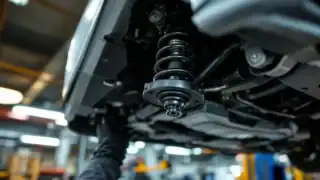
A failing suspension isn’t something you can ignore. Hyundai suspension replacement becomes necessary when the shock absorbers, struts, springs, or control arms wear out or sustain damage. In Mackay, where roads range from smooth urban stretches to rougher regional routes, suspension components take a real beating. A worn suspension doesn’t just make your ride uncomfortable—it affects how your Hyundai handles corners, brakes, and even how safely it sits on the road. We diagnose suspension issues with the same Snap-On diagnostic equipment we use for engine faults, so we find the real problem fast instead of guessing.
Signs Your Hyundai Suspension Needs Attention
Most drivers notice suspension wear through physical symptoms before anything becomes dangerous. If your Hyundai bounces excessively after hitting a bump, or takes a long time to settle, your shock absorbers have likely lost their damping ability. Dips or sags at one corner suggest a spring has weakened or broken. Clunking or rattling sounds from under the car, especially over rough ground, point to worn control arm bushes or ball joints. Uneven tyre wear, particularly more wear on one edge of the tyre than the other, is often caused by suspension geometry that’s gone out of alignment due to wear in steering and suspension components.
- Bouncy or spongy ride that doesn’t settle after bumps
- Visible dip or lean to one side of the car
- Clunking, clicking, or rattling from underneath
- Pulling to one side during braking
- Uneven or excessive tyre wear
- Stiff or overly soft steering feel
- Nose-dipping during hard braking
Some of these warnings develop gradually; others appear suddenly after hitting a pothole or kerb. Either way, a suspension fault affects safety—your brakes work less effectively, your steering becomes less responsive, and your tyres wear unevenly. Don’t wait until the problem becomes worse.
How We Diagnose and Replace Hyundai Suspension Components
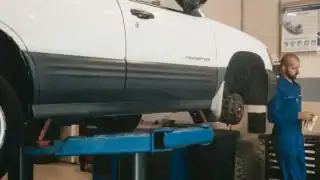
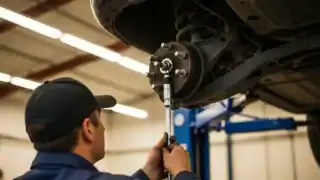
Hyundai suspension systems vary across model generations and trim levels. Older Hyundai models like the Getz or i30 (earlier generations) often use conventional coil-spring struts, while newer i30, i40, and Tucson models may use more advanced geometry with dual-rate springs or adjustable damping on certain variants. We start every suspension job by putting your Hyundai on a hoist and inspecting each component by hand—feeling for play in ball joints, checking spring condition, and looking for oil seepage from shock absorbers.
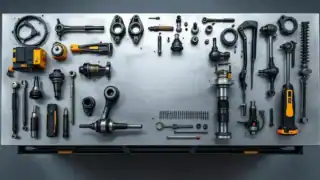
Once we’ve identified which parts need replacement, we source genuine Hyundai parts or OEM-equivalent components that meet the same specifications. We don’t use cheap aftermarket substitutes that feel different or wear out faster. When we replace struts or shocks, we always replace them in axle sets—both fronts or both rears together—so your suspension geometry stays balanced. If the inspection reveals worn control arm bushes or sway bar links, we factor those into the job rather than leaving them to fail three months later.
For many Hyundai owners, suspension work also means we’ll check your wheel alignment afterward. Worn suspension almost always pulls alignment out, and correcting that helps protect your new parts and your tyres. We have a full wheel alignment setup on site, so you don’t need to visit a second workshop.
What Affects the Cost and Time for Suspension Replacement in Mackay
The cost of a suspension job depends on several factors specific to your Hyundai. Replacing a single shock absorber costs less than replacing a full strut assembly, which includes the spring and top mount. If the work is confined to the front, it’s quicker than front-and-rear. If we discover worn bushes, tie-rod ends, or ball joints during inspection, those parts add to the bill—but fixing them now prevents more expensive damage later.
Timeframe also varies. A straightforward shock replacement might take a few hours. A full strut replacement with alignment and additional component wear can take a day. Parts availability rarely delays us—we hold stock of common Hyundai suspension items and can source others quickly. We’ll give you a transparent quote before we start, and we won’t add parts you don’t need. If the job is more involved than expected, we’ll ring and explain what we’ve found and what it costs to fix properly.
Why TFD Tyre & Mechanical Handles Hyundai Suspension Work Differently
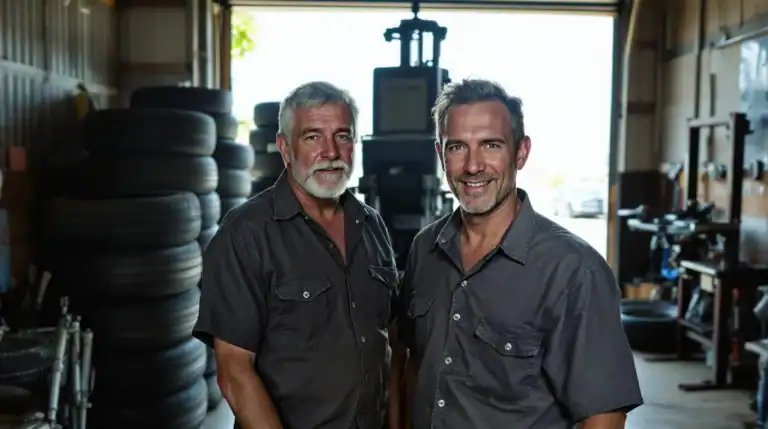
We’re a family-run workshop with 18 years in the trade, and our reputation rests on honest advice and fair pricing. We use Snap-On diagnostic equipment to pinpoint suspension faults accurately, so you’re never paying for parts you don’t need. Every suspension job gets genuine Hyundai or OEM-spec parts, not cheap aftermarket alternatives that feel loose or wear faster.
Because we’re a one-stop shop, we can handle suspension, tyres, wheel alignments, and diagnostics under one roof. You don’t get sent between a tyre shop, a mechanic, and an alignment place. We also back our work with a satisfaction guarantee—if you’re not happy with the job, we make it right. All of this keeps your costs fair and your inconvenience minimal. Our team holds TMR-approved RWC and COI inspection credentials, and we’re ARCtick-licensed for air conditioning work, so whatever your Hyundai needs beyond suspension, we can help.
Book Your Free Suspension Inspection in Mackay Today
If your Hyundai feels loose, bouncy, or uneven on the road, get it inspected before suspension wear affects your safety or damages other components. Book Your Free Inspection online or Call Us Today, and we’ll diagnose the issue and give you a straight answer about what needs fixing.