A tailshaft connects your transmission to the rear differential, transferring engine power to the wheels. For Jeep owners, a failing tailshaft isn’t just an inconvenience — it’s a safety issue that can leave you stranded or cause loss of control. Jeep tailshaft repair requires precise diagnostics and genuine parts to restore the reliability your vehicle needs. If you’re in Mackay and noticing symptoms like clunking, vibration, or scraping sounds from underneath, this guide explains what’s happening and how TFD Tyre & Mechanical can help.
Common Signs Your Jeep Tailshaft Needs Attention
Tailshaft problems usually announce themselves clearly. The most obvious symptom is a clunking noise from underneath the vehicle when you accelerate or coast, particularly noticeable in an automatic transmission Jeep. You might feel vibration through the floor or steering wheel that gets worse at certain speeds. Some owners report a scraping sound, especially over bumps, or a sensation that power isn’t reaching the rear wheels evenly. In some cases, you’ll notice the vehicle pulling to one side or feeling loose through corners.
These symptoms often develop gradually. Early warning signs include slight vibration that feels like it’s coming from the centre of the vehicle, or a barely noticeable clunk when you shift into gear. Don’t ignore these early hints — a small bearing failure or worn universal joint on a Jeep tailshaft can escalate quickly into a complete loss of drive or, worse, sudden failure while driving.
How We Diagnose and Repair Jeep Tailshaft Issues
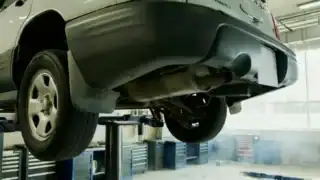
Tailshaft repair starts with thorough inspection. We lift your Jeep safely and manually rotate the rear wheels while the vehicle is in neutral, feeling for resistance, grinding, or play in the shaft. We check for visible damage like dents, scoring, or oil weeping from the bearing seals. We listen carefully for the type of noise and note exactly when it occurs — on acceleration, deceleration, or coasting — because each pattern tells us where the fault lies.
Using our Snap-On diagnostic equipment, we can measure runout (the amount a spinning shaft deviates from true) and identify bent shafts or worn bearings with precision. For Jeep models, we reference the original service specifications to understand the exact tolerances and wear limits your specific vehicle requires. A worn bearing in a Jeep’s tailshaft often shows up as lateral play that our equipment captures accurately, letting us confirm the fault before disassembly.
Once we’ve identified the problem, repair options depend on what we find. If it’s a bearing failure, we can often replace the bearing and seal assembly without replacing the entire shaft — genuine OEM or OEM-equivalent parts ensure the repair lasts. If the shaft itself is bent or cracked, we fit a replacement that matches Jeep’s original specifications exactly. We always inspect the universal joints and check the drive shaft mounting brackets for wear, since problems often cascade from one component to another.
What Affects Repair Time and Cost for Jeep Tailshaft Work
Several factors influence how long a Jeep tailshaft repair takes. The first is diagnosis — if the problem is straightforward (a worn bearing), we can often complete the work in a single day. If the shaft is bent and needs replacement, or if we discover secondary damage during disassembly, the job extends to two days. Parts availability matters too. We stock common replacement components and can source genuine Jeep parts quickly, but some special assemblies may take longer to arrive.
Cost depends on which component has failed and whether you choose OEM or OEM-equivalent parts. A bearing and seal replacement costs less than a full shaft replacement. We always discuss both options upfront so you understand what’s happening and why, with transparent quotes before we start any work. We never recommend expensive repairs you don’t actually need — our approach is honest advice at a fair price, not upselling.
Why Choose TFD Tyre & Mechanical in Mackay
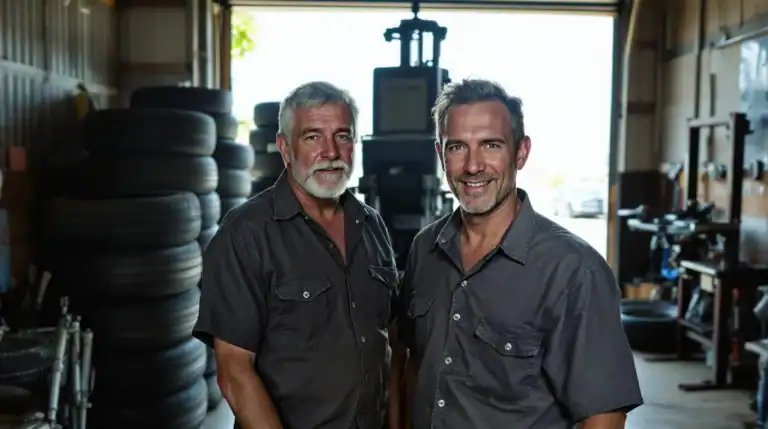
We’re a family-run father-and-son workshop with 18 years in the trade, serving Jeep owners across Mackay and the surrounding area. Our latest Snap-On diagnostic equipment finds the real fault fast, cutting guesswork out of tailshaft diagnosis. We fit genuine and OEM-spec parts, not cheap substitutes that fail quickly — your Jeep deserves components built to last.
We offer a satisfaction guarantee: if you’re not happy with the repair, we make it right. We’re also a one-stop shop, so if your Jeep needs other work like wheel alignment, tyre fitting, or an inspection, you don’t need to drive between multiple workshops. We handle it all under one roof with honest, transparent service. Our customers have rated us 4.7 out of 5 stars across 89+ reviews, reflecting our commitment to quality work and straight-up advice.
What Happens During a Jeep Tailshaft Repair
When you bring your Jeep to us for tailshaft work, we start by getting the full picture. We ask detailed questions about when the noise or vibration started, whether it’s worse in certain conditions, and if you’ve noticed any changes in how the vehicle drives. This conversation, combined with our hands-on inspection and diagnostic equipment, tells us exactly what needs fixing.
For many Jeep models, the tailshaft connects via universal joints that can wear over time, especially if you’ve been driving through rough terrain. We check these carefully as part of the repair process. If you’ve been towing or carrying heavy loads, the additional stress on the tailshaft assembly often shows up first in the bearings or the shaft itself. We factor in your driving patterns when recommending the right repair approach.
Next Steps for Your Jeep
If you’re hearing noises or feeling vibration from your Jeep, don’t delay. A failing tailshaft can worsen quickly, and safety comes first. Call us today to describe what you’ve noticed, or book your free inspection online and let our team diagnose the issue properly. We’ll give you clear advice and a fair quote before proceeding with any work.