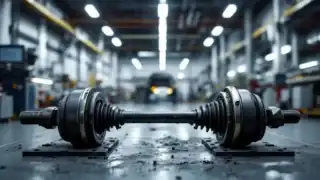
A tailshaft carries engine power to the rear wheels of your Japanese vehicle. It’s a spinning rod that runs underneath the car, connecting the gearbox to the differential. When a tailshaft develops wear, damage, or imbalance, you’ll feel vibration, hear clunking sounds, or notice your car pulling to one side. Japanese vehicles tailshaft repair in Mackay addresses these issues before they leave you stranded or cause further damage to suspension and bearings.
What Causes Tailshaft Damage in Japanese Vehicles?
Tailshafts fail for several reasons. The most common culprit is wear in the universal joints (UJs) at each end of the shaft. These joints flex and rotate thousands of times every trip, and grease seals eventually wear out, allowing moisture and grit to enter. Once that happens, the joint spins roughly, creating vibration that you’ll feel through the floor or steering wheel.
Centre bearing wear is another frequent issue, especially in longer shafts found in some Japanese models. The bearing supports the middle of the shaft and reduces deflection. When it fails, the shaft can contact the gearbox or bend under load, which leads to noise and loss of power delivery.
Impact damage also happens. Hitting a pothole, scraping an obstacle underneath, or rolling over debris can bend the shaft or crack welds if it’s been repaired before. Japanese vehicles, particularly utes and SUVs used for work or travel, are prone to this kind of damage.
Common Warning Signs Your Tailshaft Needs Attention
- Vibration felt through the floor or seat, especially at highway speeds
- Clunking or clicking noise from underneath when accelerating or decelerating
- A groaning or humming sound that changes pitch with speed
- The car feeling like it’s pulling or drifting slightly to one side
- Difficulty engaging gears smoothly, or grinding when selecting reverse
- Visible damage, rust, or weeping grease around the shaft ends
If you notice any of these signs, bring your Japanese vehicle to us for inspection. A failing tailshaft can damage the gearbox and suspension if left unchecked.
How We Diagnose and Repair Japanese Vehicle Tailshafts
Our first step is a full vehicle inspection under load and on the hoist. We spin the shaft by hand and watch for play, stiffness, or excessive movement in the UJs. We check the centre bearing mounting, measure shaft runout with our latest Snap-On diagnostic equipment, and listen for bearing noise. This tells us whether the problem is a worn joint, a bent shaft, or bearing failure.
For Japanese vehicles, we pay close attention to OEM design specifics. Toyota, Nissan, Mitsubishi, and Mazda models often have slightly different joint configurations and balance requirements. We consult the relevant workshop manual to ensure our repair meets the manufacturer’s specification, not just a generic fix.
Once we’ve identified the fault, we’ll explain your options. Small jobs like replacing worn UJs can often be done without removing the shaft. More serious damage requires removal and either re-engineering the shaft or fitting a genuine replacement. We always use OEM-spec parts or genuine-equivalent components that match your vehicle’s original quality. Cheap aftermarket shafts or joints often fail again within months.
For bent or damaged shafts, we assess whether straightening or replacement is the better choice. A quality straightening can work well if the damage is minor and the shaft isn’t already balancing on the edge of failure. If the shaft is cracked or severely bent, replacement is safer and longer-lasting.
What Affects Cost and Repair Time for Tailshaft Work
The cost of Japanese vehicles tailshaft repair depends on what’s actually broken. A single worn universal joint replacement is a straightforward fix. A bent shaft requiring removal, straightening, and rebalancing takes longer and costs more. Full shaft replacement, whether OEM or genuine-equivalent, sits at the higher end but gives you confidence the job won’t need repeating.
Parts availability varies. We stock common UJ kits and can often source OEM shafts within one or two days for popular models. Less common vehicles may take longer, but we’ll confirm turnaround before we start work.
Labour time ranges from a couple of hours for joint replacement to a full day for removal, repair, and rebalancing. We won’t drag out a job to inflate the bill, and we’ll give you an honest timeframe upfront and stick to it.
Why TFD Tyre & Mechanical Is Your Local Choice for Tailshaft Repair in Mackay
We’ve been operating as a family-run workshop for 18 years, and we’ve seen every tailshaft problem Japanese vehicles throw at us. We use our latest Snap-On diagnostic equipment to find the real fault fast, not guess at parts that might work. When we fit genuine and OEM-spec parts, you’re getting the quality your vehicle deserves, not cheap substitutes that fail again.
As a one-stop shop, we can inspect your entire driveline at the same time. If your tailshaft damage has caused wear in the gearbox mountings or suspension, we’ll spot it and advise you. You won’t be sent between a tyre place, a mechanic, and an inspection station, because we handle tyres, mechanical repairs, wheel alignments, RWC and COI inspections, and air-conditioning all under one roof.
We back our work with a satisfaction guarantee. If you’re not happy with the result, we make it right. That’s how we’ve built trust with Mackay families and tradies over nearly two decades. Our 4.7-star rating from 89+ five-star reviews reflects our commitment to honest advice and transparent quotes at a fair price.
Get Your Japanese Vehicle Tailshaft Checked Today
Vibration and noise from underneath your car don’t improve on their own. Book your free inspection with us to find out exactly what’s happening with your tailshaft, and we’ll give you honest advice on the best repair option. Call us today or book your free inspection online and let’s get your Japanese vehicle back to smooth, quiet operation in Mackay.