Volkswagen brakes are precision engineered systems that demand specialist attention. When your VW’s braking performance drops or warning lights appear on the dashboard, a Volkswagen brake specialist can diagnose the real fault quickly and accurately. In Mackay, we see everything from worn pads and glazed rotors to more complex issues involving brake fluid contamination and ABS sensor faults that aren’t always obvious without the right diagnostic equipment. Brake safety is non-negotiable, which is why we treat every Volkswagen brake inspection as a priority.
Common Warning Signs Your Volkswagen Brakes Need Attention
Volkswagen owners often notice subtle changes before a major brake fault develops. Listen for a high-pitched squealing sound when braking, especially in the morning or after the car has sat overnight. This often signals brake pad wear sensors activating, which is your VW’s built-in alert system. A deeper grinding noise suggests pads have worn completely and the rotor surface is now being damaged.
Feel matters too. If the brake pedal feels soft, spongy, or sinks lower than usual before stopping the car, brake fluid may be contaminated or there could be air in the system. Some Volkswagen owners report a sudden loss of braking pressure or a pedal that goes hard and unresponsive. Don’t ignore these symptoms. On models like the Golf, Jetta, and Passat, brake performance issues can escalate quickly.
- Brake warning light on the dashboard (red or amber)
- Brake pedal feels soft or spongy
- Visible brake fluid leaks under the car
- Pulling to one side during braking
- Vibration or pulsation in the brake pedal
- Squealing, grinding, or creaking noises when braking
- Longer stopping distances than normal
- ABS light activated alongside brake warning lights
How We Diagnose Volkswagen Brake Issues
A proper Volkswagen brake diagnosis goes far beyond visual inspection. We use our latest Snap-On diagnostic equipment to read fault codes from your VW’s ABS and brake control modules, pinpointing electrical issues or sensor problems that aren’t visible during a manual check. This matters because many Volkswagen models use integrated brake systems where one component fault can trigger multiple warning lights.
Our inspection process covers the complete system. We measure brake pad thickness against Volkswagen’s OEM specifications, check rotor runout and surface condition, inspect brake hoses for cracks or leaks, test brake fluid quality (old fluid absorbs moisture and loses stopping power), and examine caliper operation. For models with electronic parking brakes or brake pressure monitoring, we verify sensor function and calibration.
We also check brake fluid type and condition. Volkswagen specifies DOT 4 or DOT 5.1 fluid depending on your model year and variant. Using the wrong fluid compromises braking performance, so we always use genuine fluids or OEM-equivalent specifications. During the diagnostic, we’ll explain exactly what we found and what needs attention now versus what can be monitored.
Brake Parts and Service for Your Volkswagen
When brake pads, rotors, or fluid replacement is needed, we fit genuine or OEM-spec parts, not cheap substitutes. Volkswagen engineering tolerances are tight, and undersized or low-quality replacements can affect pedal feel, stopping distance, and overall safety. We source parts that match your vehicle’s original specification, whether that’s a Golf with a single-piston front caliper design or a Passat with larger four-piston calipers.
If your brake lines need replacement, calipers require rebuilding, or master cylinder work is necessary, we handle these in-house. Some workshops send complex brake work elsewhere, which means delays and lost transparency. We keep your Volkswagen on our ramp and complete the work properly.
What Affects Brake Service Cost and Time
Several factors influence how much brake work costs and how long it takes. The severity of wear determines whether only pads need replacing or if rotors must be machined or replaced. Some Volkswagen models have integrated brake wear sensors that need replacement alongside pads. The type of brake fluid service required (flush versus top-up) and whether ABS or electronic parking brake components need attention will also affect the final scope.
Parts availability is rarely an issue for common Volkswagen models in the Mackay area, so turnaround is usually quick. If your vehicle requires specialist electronic brake module reprogramming (less common but it happens), that adds time but we have the equipment to handle it. We always provide a transparent quote upfront so you know the cost before we start work.
Why Choose TFD Tyre & Mechanical for Your Volkswagen Brake Specialist Needs
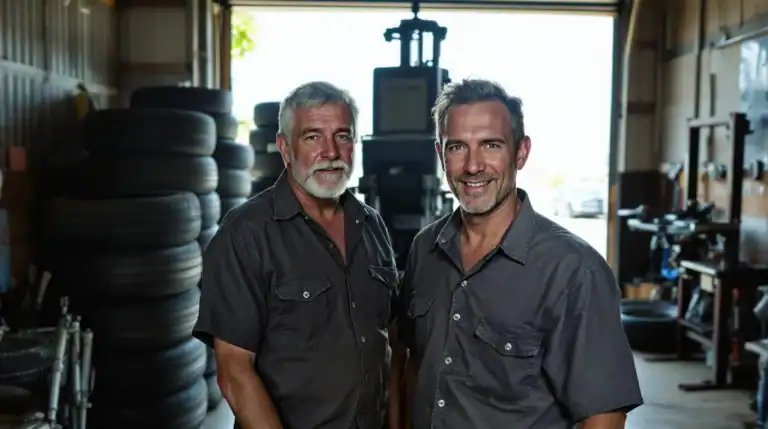
We’re a family-run father-and-son workshop with 18 years in the trade. We specialise in thorough diagnostics using the latest Snap-On equipment, which means we find the real fault fast instead of replacing parts blindly. For Volkswagen owners in Mackay, that translates to accurate advice and no unnecessary repairs.
As a one-stop shop, you don’t get sent between a tyre place, a mechanic, and a separate inspection station. We handle brakes, tyres, mechanical work, wheel alignments, and TMR-approved RWC and COI inspections under one roof. Our satisfaction guarantee means if you’re not happy with the work, we make it right. With over 89 five-star reviews, Mackay customers trust TFD Tyre & Mechanical for honest service and quality workmanship.
Book Your Volkswagen Brake Inspection in Mackay
If your VW is showing brake warning signs or it’s been a while since your brakes were last checked, don’t wait. Book Your Free Inspection online or Call Us Today to discuss what’s happening with your brakes. We’ll get you back on the road safely.