Family-Run & Trusted
Genuine & OEM Parts
5★ Reviews
Satisfaction Guaranteed

Verified 5★ Reviews

Certified Japanese Vehicles Radiator Repair In Mackay

Your Japanese vehicle's cooling system maintains proper engine temperature. We diagnose overheating and leaks quickly and repair them to get you back on the road safely.

Expert Diagnostics

Honest Advice

5★ Reviews

Japanese Radiator Repairs

Book Your Free Inspection

Fill in the form and we'll get back to you shortly. No obligation.

Booking Form
  • Vehicle Details
  • Confirm Vehicle
  • Services
  • Contact Details
Transparent Quotes
Quality Parts Used
Satisfaction Guarantee

Why Book With Us

Book Your Free Inspection
Drop Off Your Car
We Get to Work
Back on the Road

A failing radiator is one of the quickest ways to damage a Japanese vehicle’s engine. Japanese vehicles radiator repair isn’t just about stopping a leak or replacing a cracked core. It’s about protecting the entire cooling system and keeping your engine running at the right temperature. In Mackay’s hot climate, your radiator works harder than it might in cooler regions. If it’s not functioning properly, engine temperatures climb fast, and damage follows just as quickly. Our team at TFD Tyre & Mechanical has spent 18 years keeping Japanese vehicles on the road, and we’ve seen firsthand how important early diagnosis is when cooling system problems emerge.

What Are the Signs Your Japanese Vehicle Needs Radiator Repair?

Most radiator issues announce themselves before they become catastrophic. If you notice any of these warning signs, bring your Japanese vehicle in for inspection.

  • Sweet-smelling coolant pooling under your parked car or dripping from under the bonnet
  • Engine temperature gauge climbing into the hot zone or warning lights on the dashboard
  • Visible cracks, corrosion, or discolouration on the radiator core or end tanks
  • Hissing sounds from the engine bay when the vehicle is running or just after it’s switched off
  • Loss of coolant between services without any visible leak
  • Cloudy, rusty, or discoloured coolant when you check the overflow bottle
  • Engine overheating on short drives or in traffic, even if highway driving is fine

Japanese vehicles, especially Toyota, Nissan, Mazda and Mitsubishi models, often show coolant loss gradually before a major failure. Don’t ignore it. A small leak today can become an overheating crisis tomorrow, and an overheated engine can cost far more to repair than the radiator itself.

How We Diagnose Japanese Vehicle Cooling System Faults

Japanese vehicles radiator repair starts with accurate diagnosis. We don’t guess. Using our latest Snap-On diagnostic equipment, we inspect the entire cooling circuit, not just the radiator. Here’s what we check.

First, we perform a system pressure test. This pinpoints small leaks that might not be visible to the eye. We can identify whether the radiator itself is leaking, or whether the problem lies in the hose connections, radiator cap, or thermostat housing. Japanese manufacturers use specific radiator designs and coolant specifications by model year, so we cross-reference your vehicle’s service schedule and use the correct OEM-spec coolant type during testing and repair.

Next, we visually inspect the radiator core, fins, and end tanks for external damage, corrosion, or internal blockages. Japanese radiators often fail due to mineral buildup in hard-water regions or from mixing incompatible coolant types. We also check the water pump, thermostat, and cooling fan operation to make sure the entire system is working together.

If we identify a radiator fault, we discuss whether repair or replacement makes sense. Small leaks in the end tank can sometimes be sealed, but most modern radiator repairs involve replacement with a genuine or OEM-equivalent radiator. We’ll never recommend an unnecessary part swap. We use genuine and OEM-spec parts, not cheap substitutes that fail within months.

Radiator Repair vs. Replacement: What Affects the Decision and Timeline

Japanese vehicles radiator repair cost and time depend on several factors. The type of damage matters most. A small pinhole leak or failed solder joint might be temporarily sealed or require a full radiator replacement. An internal blockage might be cleared with a system flush. A cracked core or bent fins almost always means replacement.

Vehicle accessibility also plays a role. Some Japanese models require significant disassembly to access the radiator safely. Newer vehicles with integrated components take longer than older models. Parts availability is rarely an issue with Japanese vehicles in Mackay. Genuine Toyota, Nissan, Mazda and Mitsubishi radiators are well-stocked, so turnaround time is usually short. Aftermarket radiators are cheaper but we always recommend OEM-spec parts to match your vehicle’s cooling capacity and design specifications.

We’ll give you a transparent quote before we start work. You’ll know exactly what needs to happen and why before we pick up a spanner. Labour time varies, but most radiator jobs are completed within a day once parts are on hand.

Why Japanese Vehicle Owners in Mackay Choose TFD Tyre & Mechanical for Radiator Repair

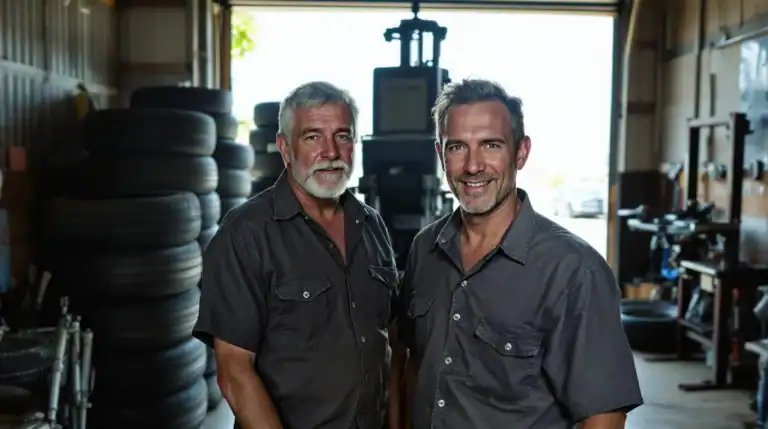
We’re a family-run father-and-son workshop with 18 years in the trade. We understand Japanese vehicles inside out. We’re not a chain or franchise. Every decision we make is about keeping your car reliable and your costs fair, not maximising profit on parts or upsell.

We have the right equipment to find the real fault fast. Our latest Snap-On diagnostic kit doesn’t guess. It tests. We use genuine and OEM-spec parts, not cheap radiators that fail again in a year. We’re also a one-stop shop. If your coolant leak has damaged your alternator or affected your air-con efficiency, we can handle that here without sending you between workshops across Mackay. We offer tyre sales and fitting, wheel alignments, TMR-approved RWC and COI inspections, ARCtick-licensed air conditioning service, and logbook servicing all under one roof.

Our customers back us up. We’ve earned a 4.7 star rating across 89 five-star reviews. And if you’re not happy with the work, we make it right. That’s our satisfaction guarantee.

Get Your Japanese Vehicle’s Radiator Inspected in Mackay Today

If your engine temperature is climbing or you’ve spotted coolant under your car, don’t wait. Book Your Free Inspection online or Call Us Today. We’ll diagnose the problem, explain your options, and get you back on the road with a cooling system you can trust.
Other Services

Whatever your needs we have you covered, see some similar services below or click "See All Services" to explore our full service offering.

Honest Mechanics Mackay Drivers Rely On

Family-run by Mark and Elijah with 18 years in the trade, we give you straight answers, fair prices, and quality parts — not the runaround.

Honest, Upfront Quotes

You’ll know exactly what’s needed and what it costs before we touch your car.

Latest Snap-On Diagnostics

Bring your vehicle in and we’ll assess it and give you a clear, honest quote upfront.

OEM-Spec Parts & Warranty

We use genuine Japanese parts and back every repair with our satisfaction guarantee.

Brands We Service

Whatever your needs chances are we have you covered, see other brands we service below or click "See All Brands" to see the full list of brands we service.

How Japanese Radiator Repair Works

From diagnosis to collection, we repair your Japanese vehicle's cooling system professionally.

Step 1

Book Your Free Inspection

Book your free radiator inspection to diagnose cooling issues and get a clear repair plan.

Step 2

Cooling System Diagnosis

We inspect hoses, test coolant condition, and run diagnostic scans using Japanese-compatible equipment.

Step 3

Radiator Repair and Replacement

We repair leaks, flush systems, or fit OEM-spec radiators tailored to your Japanese vehicle.

Step 4

Test and Collection

We test cooling performance, confirm temperature stability, and hand back your vehicle ready to drive.

Rated 4.7 Stars by Our Customers

Verified 5★ Reviews

Quality Parts From Trusted Suppliers

We fit genuine and OEM-spec parts sourced from reputable suppliers. No cheap substitutes - just quality components that do the job properly.

Book Your Free Inspection

Fill in the form and we'll get back to you shortly. No obligation.

Booking Form
  • Vehicle Details
  • Confirm Vehicle
  • Services
  • Contact Details
Transparent Quotes
Quality Parts Used
Satisfaction Guarantee

Why Book With Us

Book Your Free Inspection
Drop Off Your Car
We Get to Work
Back on the Road

Got Questions? We Have Answers

Browse the questions below for quick answers about our services. If yours isn't listed, give us a call and we'll sort you out.

It depends on what’s wrong with your radiator. A simple leak repair or thermostat replacement usually takes 1-2 hours. If the radiator core needs replacing, allow 2-3 hours. We’ll diagnose the fault first, so you’ll know exactly what’s needed and how long it’ll take before we start work. We can often complete radiator repairs same-day in Mackay, but we’ll give you a realistic timeframe when we inspect your vehicle.

Watch for coolant leaks under your car, an overheating warning light on the dashboard, or steam coming from under the bonnet. You might notice sweet-smelling fluid pooling where you park, or the temperature gauge climbing into the red zone. A faulty radiator can cause serious engine damage if left unchecked, so don’t ignore these signs. If you spot any of these, bring your vehicle in for an inspection before the problem gets worse.

No, it won’t. Australian consumer law under ACCC guidance generally supports independent servicing and repairs without affecting your manufacturer warranty. The dealership can’t refuse warranty claims simply because independent work was done, provided the repair itself wasn’t the cause of a separate fault. That said, keep records of all work and parts used. If you have specific warranty concerns, check your paperwork or contact your manufacturer directly for peace of mind.

We start by testing your cooling system under pressure to find leaks, then inspect the radiator core visually for damage or corrosion. If it’s a small leak, we may be able to seal it. If the core is damaged or blocked, the radiator usually needs replacing. We use genuine or OEM-spec parts matched to your vehicle, never cheap substitutes. We’ll explain what we find and show you your options before proceeding.

Radiators don’t need routine servicing like brakes or filters, but your coolant should be flushed and replaced according to your vehicle’s logbook schedule, typically every 2-3 years or 40,000-60,000 km. Fresh coolant keeps your radiator internals clean and protects against corrosion. Regular coolant maintenance prevents most radiator problems from developing in the first place, so stick to your logbook schedule and you’ll avoid expensive repairs down the track.

Japanese vehicles are generally reliable, but older Toyotas and Hondas can develop coolant leaks from radiator seams or thermostat housings as they age. Some models are prone to radiator corrosion if coolant maintenance is missed. Modern Japanese vehicles are less prone to radiator failure, but neglecting coolant flushes or ignoring overheating warnings can still cause trouble. We see radiator issues regularly across Japanese brands and use OEM-equivalent parts that match manufacturer specifications for your specific model.

A leak repair addresses a small hole or crack, sealing it so coolant no longer escapes. This works only if the damage is minor and the radiator core is otherwise sound. A full replacement is needed when the core is extensively corroded, damaged, or blocked. Replacement is more costly upfront but gives you a reliable, long-term fix. We’ll assess which option suits your situation and your vehicle’s age and value before recommending action.

Not safely, no. A leaking radiator loses coolant, which means your engine will overheat. Driving on an overheating engine causes serious damage to the cylinder head, gaskets, and internal components, turning a simple radiator repair into an expensive engine rebuild. If you see coolant leaking or get an overheating warning, stop driving and call us. It’s far cheaper to fix the radiator now than to ignore it and face catastrophic engine failure later.

Continue to site