Japanese vehicles brake repair is one of the most critical services your car needs, whether you’re driving a Toyota, Nissan, Mazda, Mitsubishi, or Honda in Mackay. Brakes are a safety system, not a convenience feature. When they start to wear, fade, or produce warning signs, the decision to repair them quickly directly affects your safety and that of everyone else on the road. Unlike some maintenance tasks you can delay, brake issues demand immediate professional attention. We inspect Japanese vehicles brake systems regularly here at TFD Tyre & Mechanical, and we’ve learned that catching problems early saves money and keeps drivers safe.
Warning Signs Your Japanese Vehicle Needs Brake Repair
Your car will usually tell you something’s wrong before a brake failure happens. Pay attention to these common symptoms that bring owners in for Japanese vehicles brake repair:
- Soft, spongy, or low brake pedal that requires extra pressure to stop
- Grinding or metal-on-metal noise when braking
- Squealing or high-pitched sounds, especially on cold mornings
- Brake warning light on the dashboard
- Vehicle pulling to one side during braking
- Brake fluid leaks under the car or low fluid in the master cylinder
- Vibration or pulsing in the pedal or steering wheel when braking
- Brake fluid that appears dark, dirty, or smells burnt
Many Japanese vehicles, particularly older Toyotas and Hondas, can develop gradual pad wear that owners don’t notice until the pads are nearly gone. Some models are prone to corrosion inside the brake hose or sticking callipers if they sit unused for extended periods. Others, like Nissans and Mazdas, sometimes show early pad wear on one wheel due to uneven pressure distribution. These are predictable patterns we see regularly in Mackay, and that experience helps us diagnose the real problem quickly rather than replacing parts unnecessarily.
What We Do During a Japanese Vehicles Brake System Inspection
When you bring your Japanese vehicle in for brake repair, we don’t just replace pads and hope for the best. We perform a full diagnostic inspection using our latest Snap-On diagnostic equipment to identify the root cause of the issue. Here’s what happens:
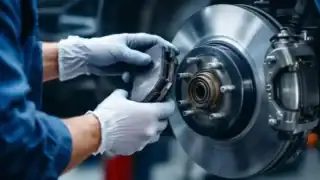
Visual inspection of all four wheels: We remove each wheel and measure pad thickness, inspect rotor condition, and check for fluid leaks at the brake hose connections and callipers. For Japanese vehicles, we pay particular attention to the condition of the dust boots on callipers, as corrosion inside can cause uneven braking pressure.
Brake fluid testing: Your brake fluid absorbs moisture over time, which lowers its boiling point and can cause brake fade under heavy use. We test the moisture content and fluid condition. Many Japanese vehicles benefit from a fluid flush every two years, especially if you tow or drive in wet conditions regularly.
Brake hose and line inspection: We check for cracks, bulging, or internal corrosion that restricts fluid flow. Japanese vehicles often use rubber hoses in the rear, which can degrade faster than braided steel lines.
Callipers and wheel cylinders: We confirm they’re moving freely, not sticking, and sealing properly. A sticking callipers on one wheel is common and causes uneven pad wear and pulls during braking.
Master cylinder function: We verify the master cylinder is holding pressure and not leaking internally, which would cause a soft or slowly sinking pedal.
Once we’ve identified the issue, we’ll explain exactly what needs attention and why. You’ll receive a transparent quote before we start any work, and we’ll only recommend what your Japanese vehicle actually needs.
Parts, Materials, and OEM Specifications for Japanese Vehicles Brakes
We use genuine and OEM-spec parts for Japanese vehicles brake repair, not cheap substitutes. That means Toyota brake pads meet Toyota’s friction and wear specifications, Nissan components match Nissan’s engineering standards, and so on. These parts cost a bit more upfront, but they preserve the braking performance your vehicle was designed for and last longer than low-grade aftermarket alternatives.
When we replace brake fluid on Japanese vehicles, we use the correct grade and viscosity for your model. Many newer Toyotas and Hondas call for DOT 3 or DOT 4 fluid, but some models specify a different standard. Using the wrong fluid can affect braking feel and safety. We stock the right fluid for common Japanese makes in Mackay and surrounding areas.
Cost Factors and Time for Japanese Vehicles Brake Repair
Several variables affect how much your Japanese vehicles brake repair will cost and how long it takes. A simple brake pad replacement typically takes less time than a job that includes rotor resurfacing, callipers servicing, and a fluid flush. The condition of your rotors matters too. If they’re slightly scored but still within thickness limits, we can often machine them. If they’re warped or worn below the minimum, replacement is necessary.
Parts availability is rarely an issue for common Japanese vehicles like Toyota, Honda, Nissan, and Mazda. We source genuine and OEM-equivalent components quickly, so you’re not waiting days for repair parts. More specialised Japanese vehicles or older models might take a day or two longer, but we’ll let you know upfront.
We’re honest about cost. We won’t suggest a full brake system overhaul when you only need new pads. Equally, we won’t delay recommending rotor replacement if your rotors are unsafe, even if it costs more. Transparent quotes at a fair price is how we’ve worked for 18 years.
Why Choose TFD Tyre & Mechanical for Japanese Vehicles Brake Repair
We’re a family-run, independent workshop with nearly two decades of experience. We’ve repaired thousands of Japanese vehicles, so we understand the common failure patterns, the right parts to use, and how to diagnose issues accurately the first time. Our latest Snap-On diagnostic equipment finds the real fault fast instead of guessing or replacing unnecessary components.
We’re a one-stop shop. You don’t need to visit a brake specialist, then a tyre place, then an alignment shop. We handle mechanical repairs, brake servicing, tyre sales and fitting, wheel alignments, and air conditioning all under one roof. If your brake repair uncovers a suspension issue or tyre concern, we can address it immediately. We’re also TMR-approved for RWC and COI inspections and ARCtick-licensed for air conditioning work.
We back our work with a satisfaction guarantee. If you’re not happy with the repair, we make it right. That confidence comes from doing the work properly the first time and using parts we trust. Our 4.7-star rating from over 89 five-star reviews reflects the standard we set for every Japanese vehicles brake repair.
Book Your Japanese Vehicle Brake Inspection in Mackay
Don’t ignore brake warning signs. If you’ve noticed soft pedal feel, noise, warning lights, or uneven braking on your Japanese vehicle, book your free inspection with us now. We’ll diagnose the issue, explain what’s needed, and give you a transparent quote. Call Us Today or Book Your Free Inspection online to arrange a time that suits you.